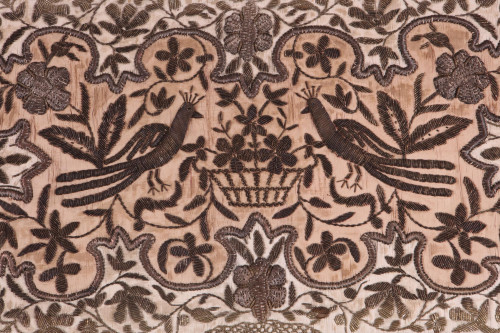
An early 18th century bizarre style needlework picture
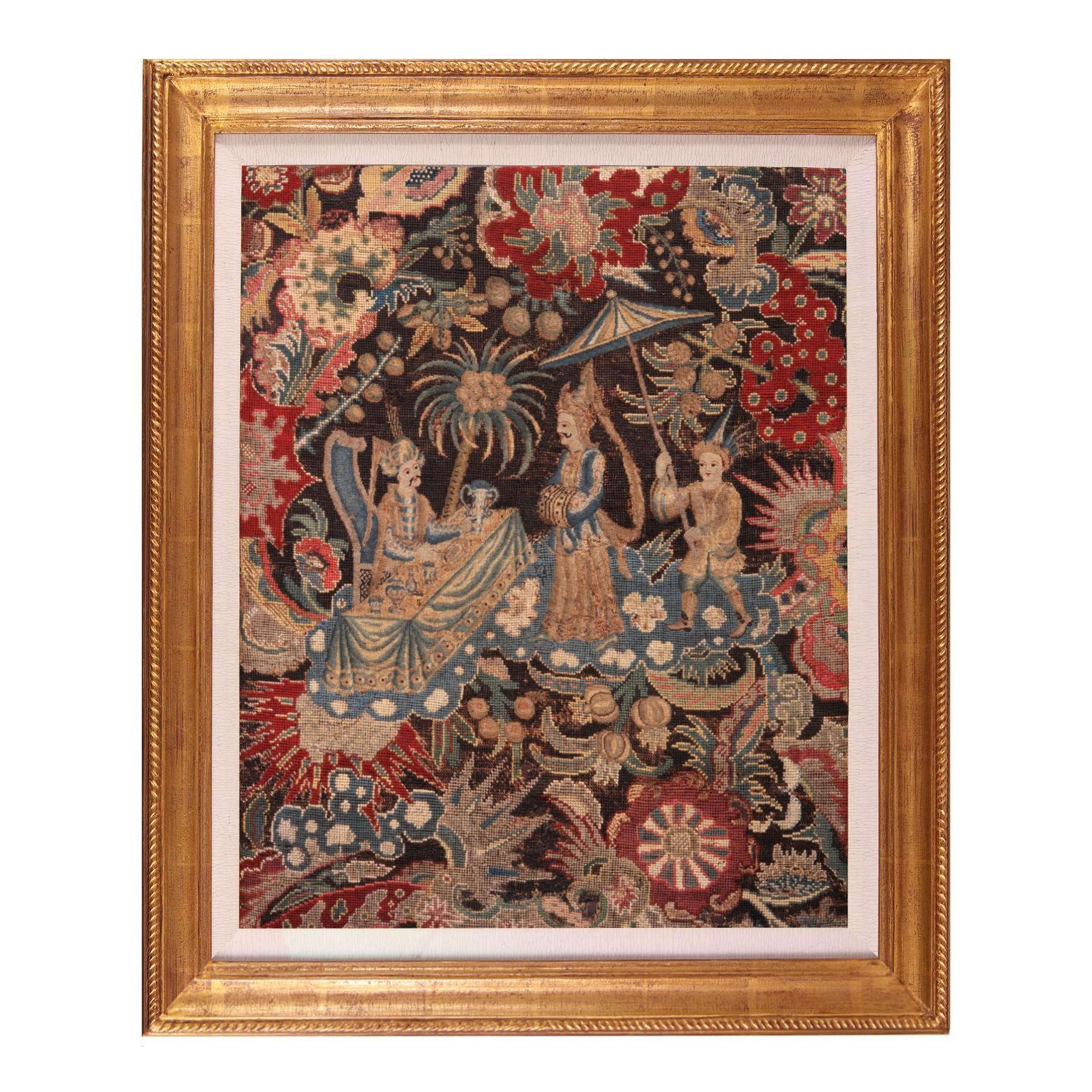
An early 18th century bizarre style needlework picture
1497
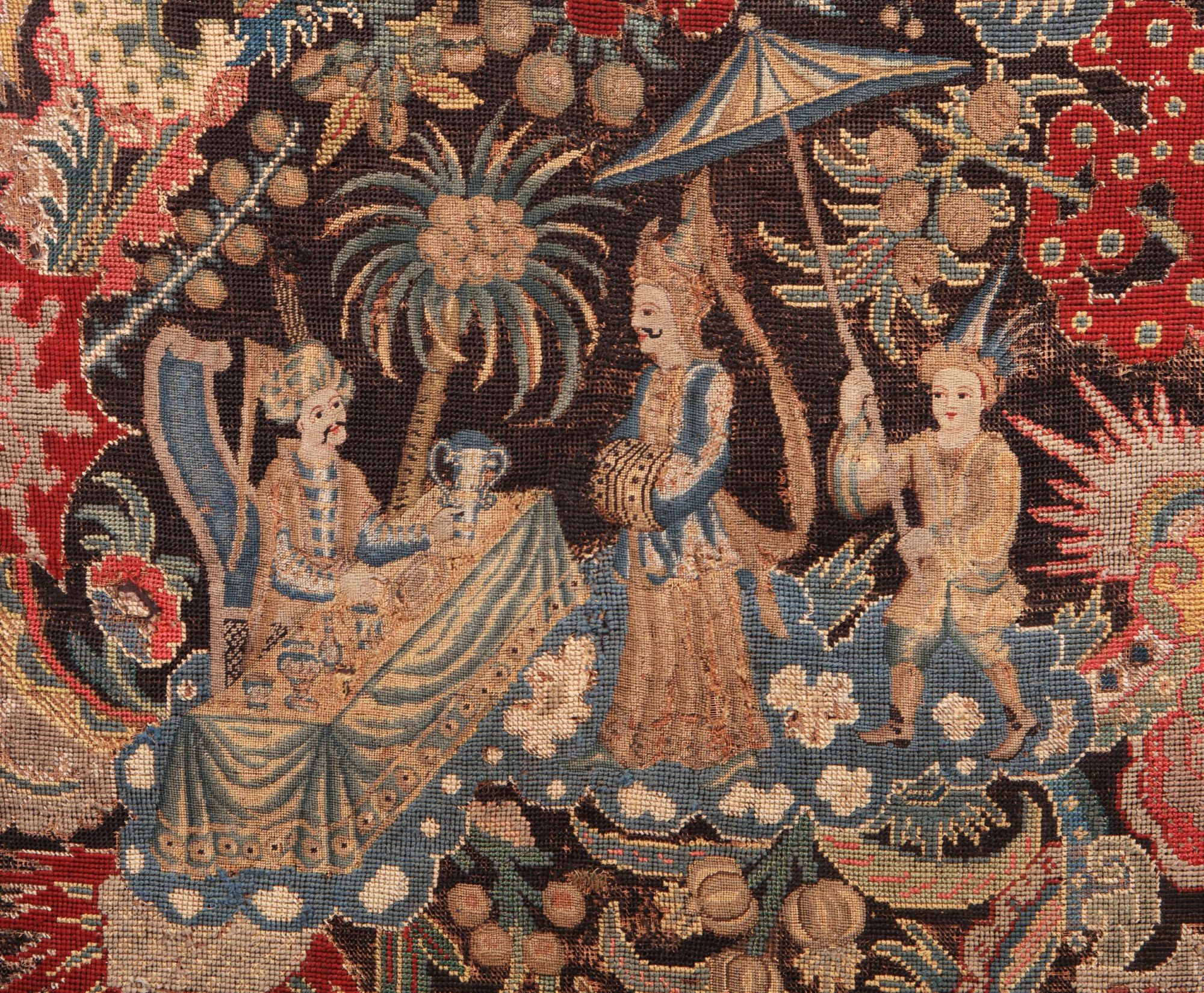
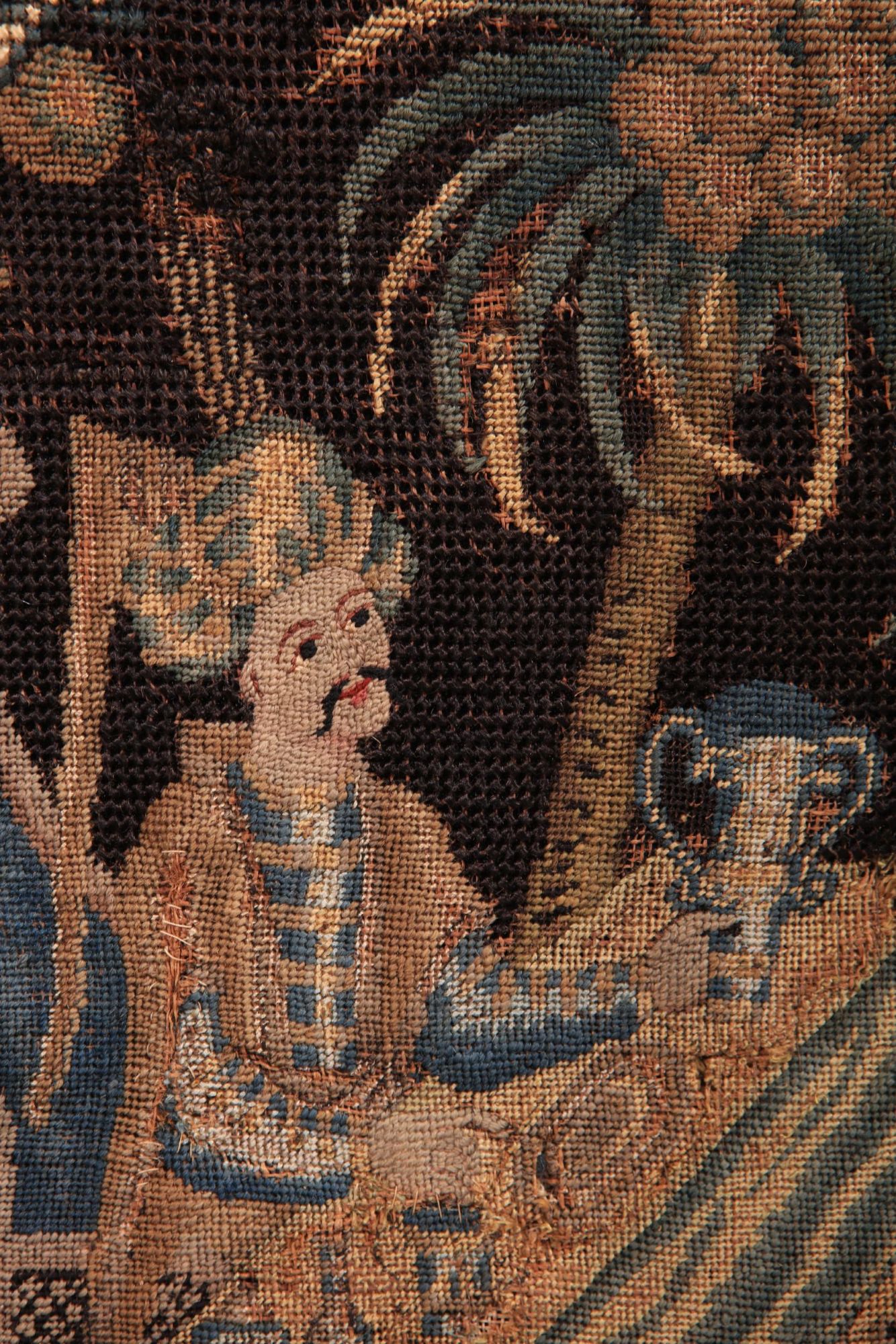
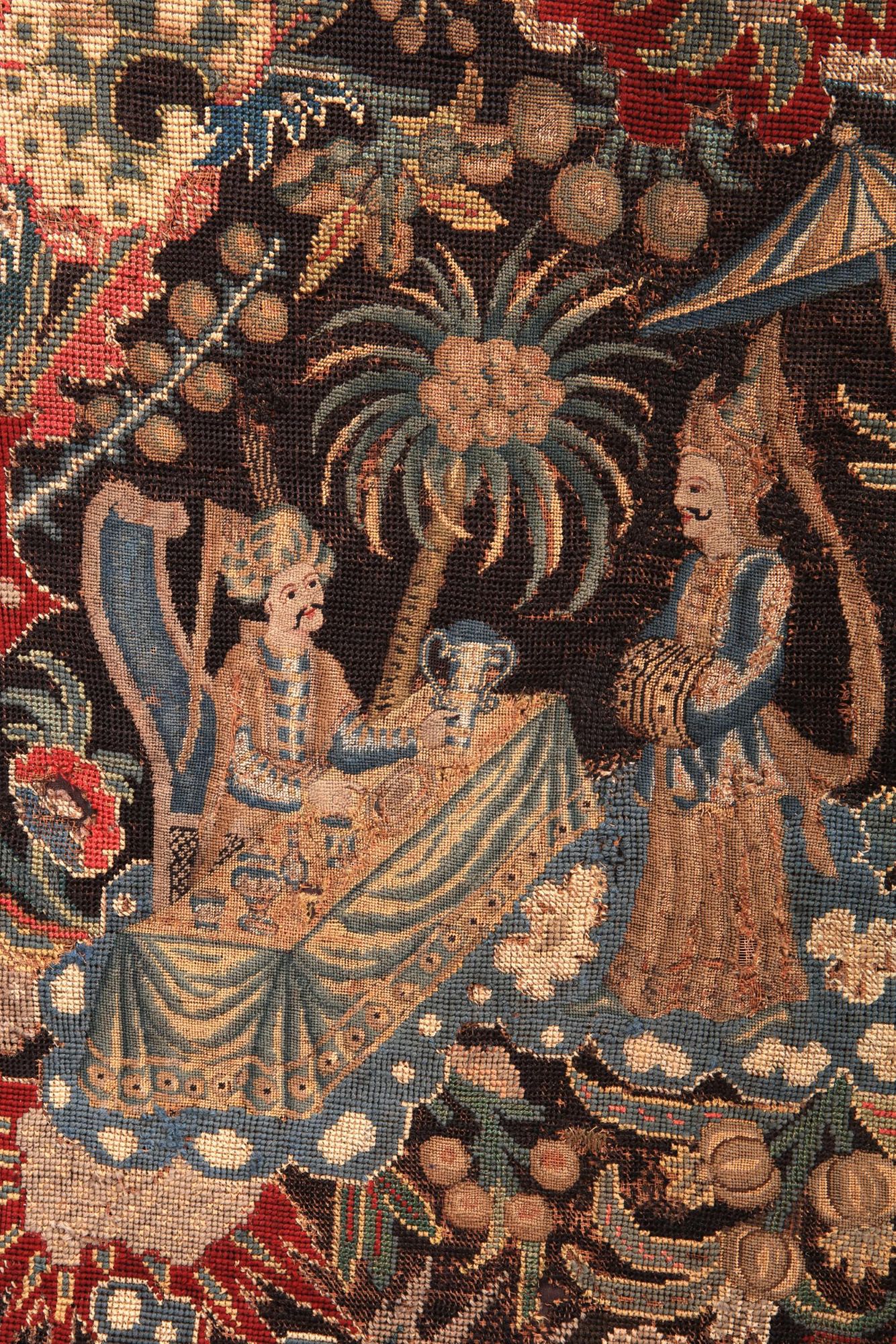
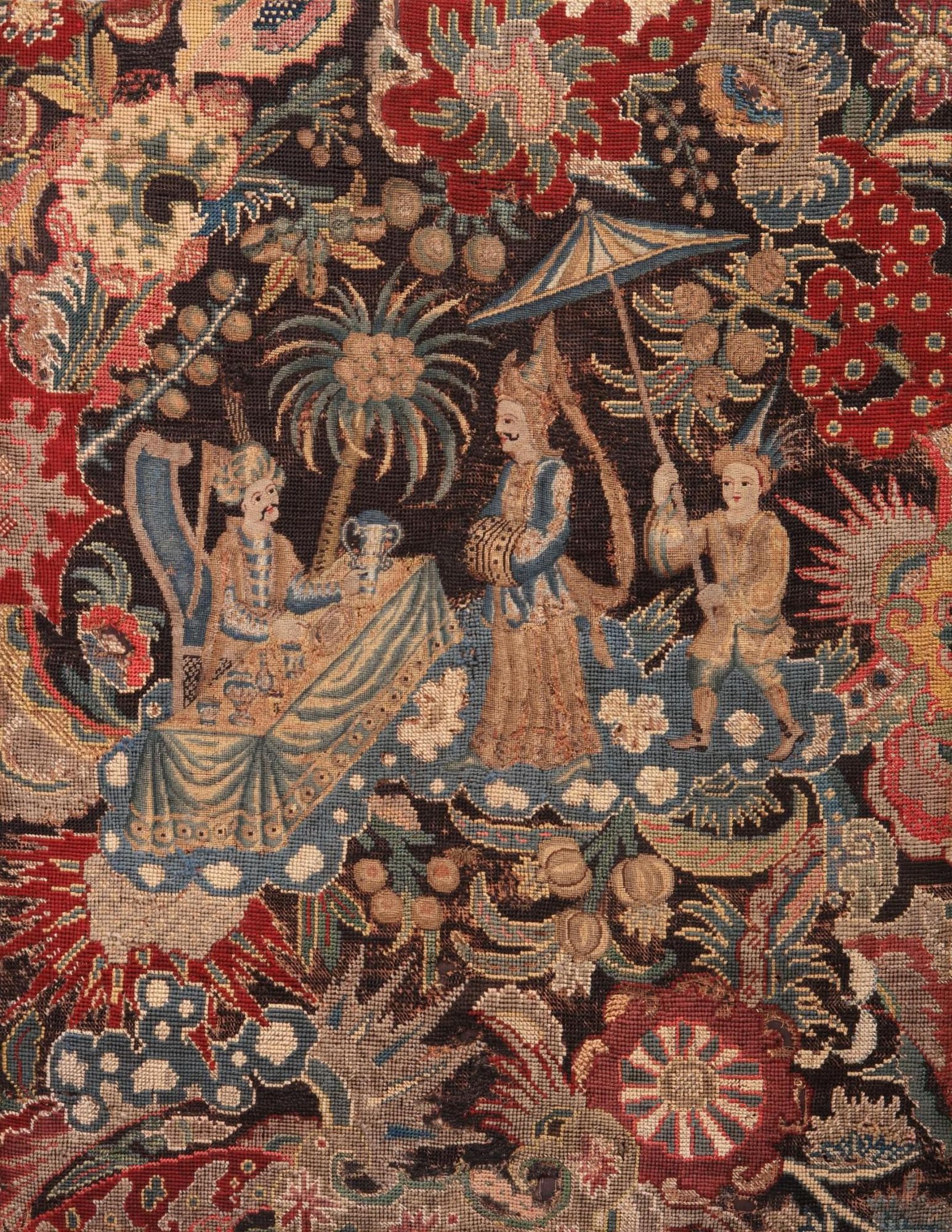
An early 18th century French bizarre style needlework picture 'after the Indian manner', depicting two Viziers, one seated at a lavish table setting, the other with accompanying attendant holding a sun parasol, surrounded by many asymmetrical patterns in bright colours against a dark ground, all finely worked in wool and silk.
This charming embroidered scene, made in the early 18th century in either France or England, is similar to surviving examples associated with French origins and interiors.
Oversized fantastical motifs, familiar from so called 'bizarre silks' appear alongside figures in loosely imagined Chinese dress. Furnishings in this early chinoiserie style, worked in durable tent and cross stitch on canvas, were widely produced and used across northern Europe during the first half of the 18th century. In the collection of The Metropolitan Museum in New York is a set of bed hangings, with chinoiserie motifs depicted on rich golden yellow grounds. Pictures with yellow backgrounds are generally associated with French manufacture.
Most embroideries of this type, however, were executed on dark blue or black grounds, aligning them more closely with the aesthetic of English tapestries, by designers such as John Vanderbank, whose work drew upon the deep, lustrous backgrounds of Asian lacquer screens. No preparatory drawings or specific design sources have been identified for these embroideries, however they appear to be decorative pastiches, drawing inspiration from the same eclectic mix of imported textiles and their European interpretations.
A characteristic of Chinese art that both puzzled and captivated European viewers - its deliberate asymmetry - is strongly present here. Writers from the late seventeenth through the eighteenth century frequently remarked on this contrast with Western ideals of symmetry and harmonious proportion. These early chinoiserie scenes reflect an earnest attempt to capture the "beautiful disorder" that Europeans found so alluring.
Dimensions:
circa 1720
France
Betty & Gordon Moore
RELATED ITEMS